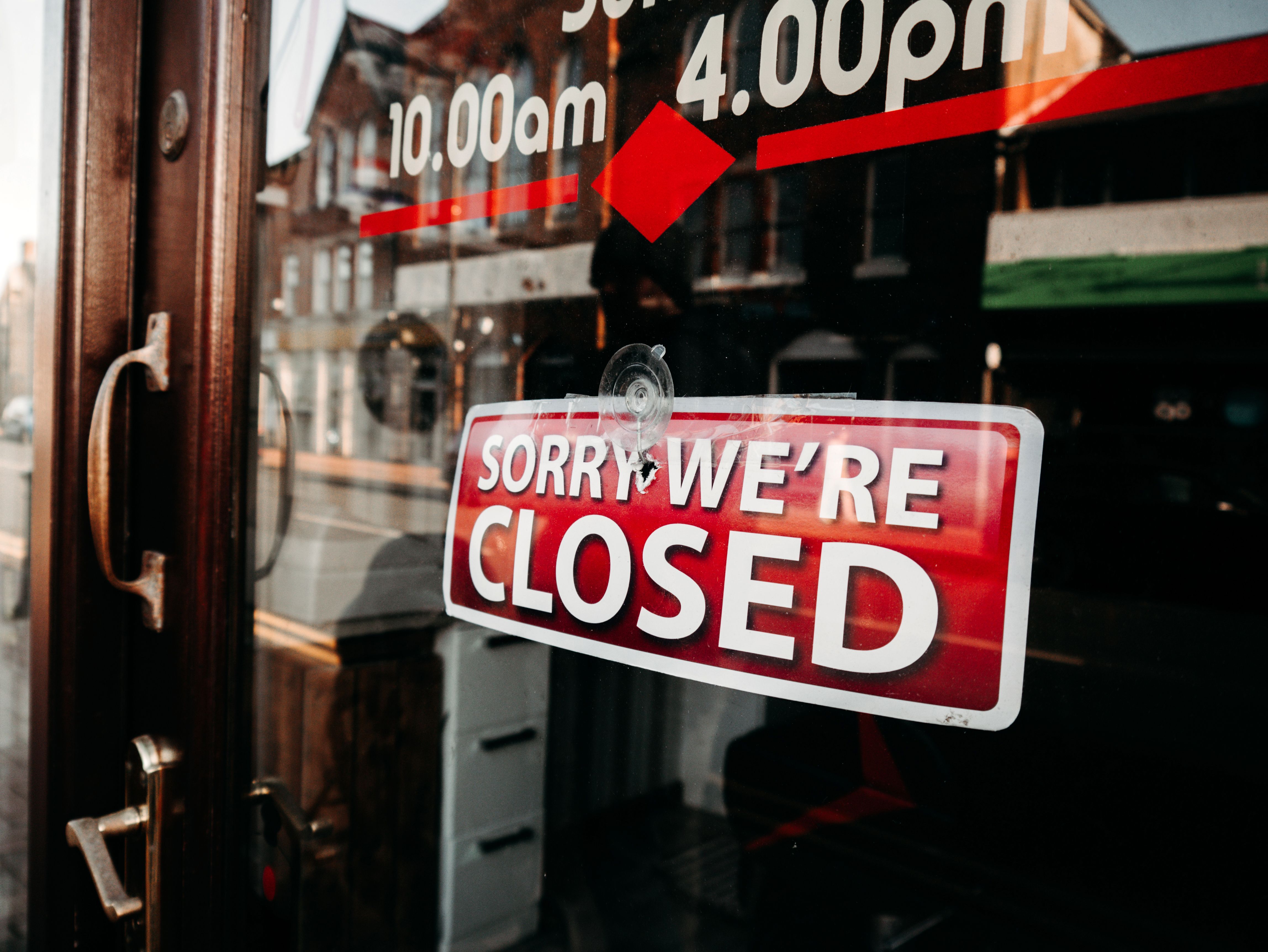
In the spring of 2021, Gap Inc. sat behind a shuttered storefront on a stretch of Manhattan retail that used to draw thousands of shoppers a day. Executive orders had closed non essential retail. Foot traffic had evaporated months earlier. Gap stopped paying rent and told its landlord, Ponte Gadea New York LLC, that force majeure excused the obligation. The building stood untouched. Nothing had burned, flooded, or collapsed. Yet Gap argued that a government order strong enough to empty a Manhattan shopping corridor was exactly the kind of event its force majeure clause was written to cover.
The court disagreed. So did the courts in two more cases that followed almost the identical script, one against Christian Louboutin, one against LA Fitness's parent company. Three tenants, three leases, three courts. All three tenants lost, and for nearly identical reasons.
That's not a coincidence. It's a pattern, and it shows landlords and tenants exactly where their own leases are still exposed.
Force majeure did not excuse rent in any of these cases because none of the leases treated rent as an obligation that could be suspended. Courts read the clauses exactly as written. If a lease assigns the risk of business interruption to the tenant, or carves financial obligations out of relief entirely, a pandemic doesn't create an exception the parties never negotiated.
Force Majeure Before Anyone Had Heard of COVID-19
Commercial lease boilerplate used to be predictable. Acts of God. Floods. Earthquakes. Fires. Wars. Terrorism. Riots. Labor strikes. Every one of those events assumed the same thing: a disruption that was physical, localized, and temporary. A hurricane closes a building. A strike halts a supply line. Nobody drafting a lease in 2015 planned for a scenario where the building would stay fully intact while an entire regional economy shut down around it.
That assumption is why COVID broke so many leases. The virus itself rarely touched the four walls of a leased space. What actually stopped commerce was government action. Legal frameworks beyond force majeure, including frustration of purpose and impossibility of performance, faced the same test as courts worked out whether a healthy building with no customers still counted as a building that couldn't perform its purpose, as one review of the pandemic's impact on lease performance lays out in detail.
Did a Government Shutdown Order Count as Force Majeure?
Sometimes. Rarely enough to matter for rent.
In Gap Inc. v. Ponte Gadea New York LLC, the Southern District of New York held that the lease had already allocated the risk of business interruption to the tenant. Force majeure did not excuse rent, and paying rent remained physically possible even though operating profitably was not. That distinction, between what a tenant can still do and what a tenant would prefer to do, decided the case.
35 East 75th Street Corp. v. Christian Louboutin LLC reached the same result through a different doctrine. Louboutin argued that pandemic shutdowns and a collapse in tourist traffic had frustrated the entire purpose of its lease. The appellate court rejected the theory. Retail closures were temporary. The lease ran for years. A commercial division analysis of the ruling noted that a short interruption inside a long term lease does not destroy the deal's fundamental purpose, even a severe one. A separate New York ruling issued around the same time rejected an identical frustration of purpose defense outright.
Amherst II UE LLC v. Fitness International, LLC closed out the trio. LA Fitness's parent stopped paying rent the moment gyms were ordered closed, relying on force majeure to justify it. The court ruled for the landlord: business interruption risk in the first case, frustration of purpose in the second, an express rent carve out in the third. Different doctrines, same outcome. Where a lease was silent or restrictive on rent, judges declined to fill the gap on the tenant's behalf, a pattern one law review traces across the full body of pandemic lease litigation. Force majeure, that body of case law confirms again and again, is a creature of contract, not equity.
What Force Majeure Clause Drafting Mistakes Still Show Up in Leases Signed After 2020?
Adding the word “pandemic” and calling it solved. Plenty of leases now read “Acts of God, flood, war, pandemic,” and stop there. That single word doesn't answer which obligations pause, whether rent is included, what counts as a qualifying pandemic, or whether a government order has to exist first. Guidance published for landlords and tenants early in the pandemic urged the parties to negotiate these specifics directly rather than lean on one added term.
Treating the virus as the trigger instead of the government order. COVID showed that governments, not pathogens, most often stop performance. A clause that only excuses disease or epidemic misses the point. Executive orders closed storefronts. Occupancy restrictions and quarantine rules did the rest. Practical drafting advice from that period recommended naming emergency declarations and public health orders explicitly, rather than the underlying disease itself.
Skipping the causation requirement. Few pre 2020 clauses required proof that the qualifying event actually caused the non performance. A tenant could point to a pandemic in the news without showing that the pandemic, specifically, prevented payment. One contract law analysis written during the litigation wave argued for exactly this kind of causation standard: performance prevented directly and solely by the qualifying event, nothing looser.
Leaving out a duty to mitigate. Litigation from the period showed courts expected tenants to attempt reasonable workarounds before claiming excuse: remote operations, online sales, curbside pickup, and alternative suppliers. Guidance aimed at lenders and landlords during the pandemic flagged mitigation as a factor courts weighed heavily, even where a force majeure clause otherwise applied.
Why This Keeps Happening?
Three forces keep bad language in circulation. Landlords recycle legacy templates instead of commissioning fresh drafting for every lease. Nobody knows what the next disruption looks like. A cyberattack, a climate event, another pathogen: overly specific language written to fight the last war tends to fail the next one. And the incentives cut in opposite directions. Landlords want payment certainty. Tenants want flexibility. Force majeure is where that argument gets negotiated in advance or fought out in court after the fact.
What Teams Can Do Differently?
Name the trigger precisely and separate the virus from the government response. A clause should treat emergency declarations, occupancy restrictions, and quarantine orders as distinct, enumerated triggers, not fold them into a single word like “pandemic” and hope a court reads it broadly. The American Bar Association's review of force majeure practice in the pandemic era makes the same point: precision in the trigger language is what determines whether a clause does anything at all.
Decide rent's fate in the clause itself, not after a dispute forces the question. Every one of the three cases above turned on how explicitly the lease treated rent. Silence favored the landlord in practice, because courts declined to infer relief the parties never wrote down. Whatever the underlying business deal is, the lease should say it directly: rent is suspended, abated, deferred, or unaffected, and under which specific conditions each applies.
Build in causation and mitigation requirements up front. Requiring proof that a qualifying event directly and solely prevented performance, paired with a defined duty to pursue reasonable alternatives, gives both sides a workable standard instead of a courtroom argument. This is exactly the kind of clause level risk that QTREN is built to surface: flagging undefined triggers, missing causation language, and rent carve outs across a portfolio of leases before the next disruption turns them into litigation.
The Next Disruption Won't Look Like COVID
Pull your own lease's force majeure clause and ask it the same questions these three courts asked. Does it name government orders as a trigger, separate from the underlying event? Does it say, in plain language, what happens to rent? Does it require proof that the event actually caused the non performance, or does it leave the door open to any tenant pointing at bad news? The next disruption, whatever form it takes, will be judged against the language sitting in the lease today. Most leases still aren't ready to answer.
Disclaimer: This article is provided for informational and educational purposes only and does not constitute legal, financial, or compliance advice. Real estate professionals should consult qualified counsel regarding force majeure clause drafting and jurisdiction specific requirements.